

HE SAID, SHE SAID
COMING SOON IN 2025

Film trigger warnings: Bloody imagery.
The Story
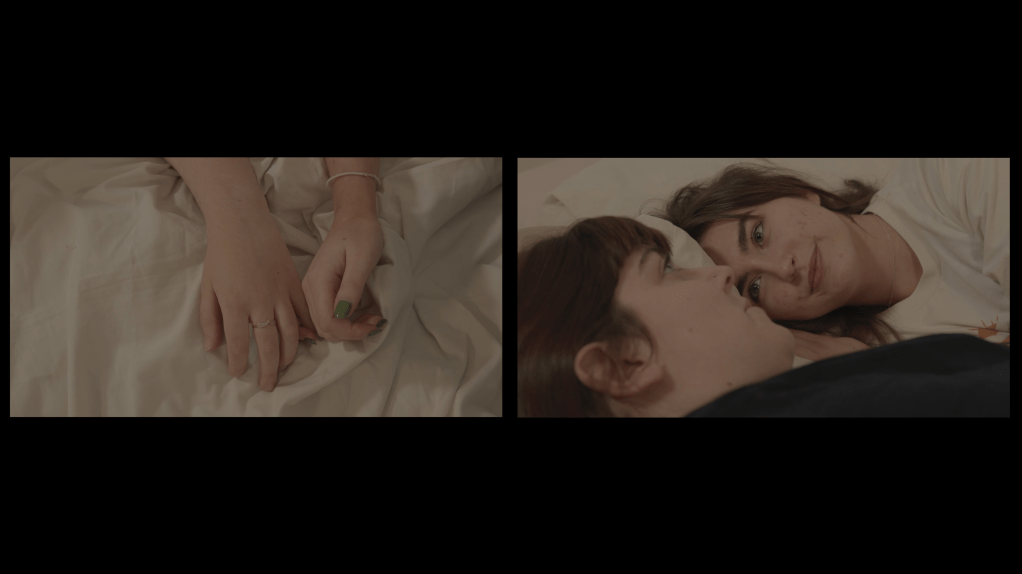
he said, she said is an experimental performance narrative which explores the cycles of nature, the female hormonal cycle, and the male gaze through the lens of Laura Mulvey’s writing Visual and Other Pleasures (1989) vs our interpretation of the female gaze. We first meet Her as she begins her cycle, uncomfortable and in pain, unsure on her place in society and her own feelings toward herself, whilst she views something on a glowing television screen. With other women surrounding Her, she takes form as Venus in Sandro Botticelli’s The Birth of Venus (1480’s), beginning her journey to discover her femininity and truest desires. Finally admitting her feelings, and reaching a place of self-acceptance, she breaks away from the scene and shares parts of herself with The Woman. Now in her truest form, she realises she cannot express herself within a patriarchal society and must push her own objectives if she is to live freely. With this, the cycle comes to an end as she sheds away outside influences to live the life she always intended for herself.
Note – Keen eyed viewers will notice a hairband around Her wrist. Throughout the film, the band travels from her love, ending with Her as a homage to the idea of the traveling hairband, a concept in which something as simple as a hair tie can connect women as they share with each other the simplicities of womanhood.
The Characters
We see Her embark on a journey of rebirth to reclaim all that men have taken from her and to break away from societal expectations. She believes that this is the only way to truly understand herself and to finally live peacefully, comfortable in her femininity and sexuality.
The Woman is a key part of Her journey as their relationship helps her to completely understand her own needs and wants, and their connection demonstrates the importance of finding a person that can relate to you and see you for who you truly are.
The Man represents the very worst parts of the patriarchal society, and in this case we see him take pleasure in the fetishisation of Her and The Woman’s relationship. He does not see them as people, merely objects that exist for his own benefit.

The Making Of
During our second year of university we were given a brief to develop a narrative around ‘Identity’. This was intended to be completed individually, however, with Wren and Erin’s growing partnership and friendship, it was clear that developing an idea together would only emphasise their voices as queer women in an industry which has focused on male led stories for to long. In order to create he said, she said Olidora created their first double narrative in which a story seemingly taking place in reality plays out whilst visions of a similar, artistic version interject. Filming this alternate reality allowed us the chance to experiment with lighting, props, and costume in a unique way, diver deeper into our own conscious and allowing ourselves to tell a side of our stories we would otherwise have hidden.
Directors Note
he said, she said was created at a very pivotal point in mine and Erin’s lives. This film allowed us to explore our own identities as queer women, our position within a patriarchal society (and creative industries), and exactly how we felt about all of this. Placing myself as the visual forefront of this narrative proved to be an extremely vulnerable decision, but one which I would choose again, as it allowed me to explore my personal limits within film at the time and how I want to be seen as a woman and as a filmmaker – plus how these two identities impact each other. Whenever I rewatch this film I feel extremely lucky to have captured myself and Erin at this stage in our lives and comparing it to how far we have come both in film and ourselves. This film is our own time-capsule which I hope in 10 years time we can revisit and update. – Wren.
Full Credits
Her played by Wren Fry
The Woman played by Erin Clark
The Man played by Harry Woods
Woman in The Birth of Venus #1 played by Mia Hughs
Woman in The Birth of Venus #2 played by Dani Driver
Directed by Wren Fry
Written and Produced by Erin Clark
Cinematography by Levi Holton
Edited by Wren Fry
Composed by Carla Polistina
Script Edited and Co-Produced by Joshua Faires
 Olidora Productions